Computational Thinking (CT) is a way of problem-solving that involves applying the logical and algorithmic concepts and strategies that underpin computer science (Yadav, Stephenson & Hong, 2017). Many researchers have suggested that computational thinking should be taught as a necessary skill alongside basic literacy and numeracy, as it empowers children from as early as Kindergarten to analyse complex problems, promotes skills needed in the 21st century workforce and supports an innovative, economically competitive society (Grover, 2018).
The computational thinking process decomposes large, complex problems and breaks them down into smaller, manageable parts, using the fundamental concepts of computer logic (CSTA & ISTE, 2011). There are a range of concepts that encompass computational thinking, however in the Australian F-10 context; abstraction, data collection, data representation, data interpretation, algorithms and implementation are specifically named as teaching priorities (ACARA, 2014). Below is a brief glossary of concepts:
| Abstraction | Removing irrelevant details to solve the main problem |
| Data Collection | Gathering relevant data |
| Data Representation | Organising data into logical depictions (e.g. graphs, charts) |
| Data Interpretation | Analysing the data for meaning (e.g. patterns, trends) |
| Algorithms | Designing instructions to fulfil a specific purpose (e.g. solve the problem, automate, complete a task within the problem) |
| Implementation | Using the system designed with the strategies above to solve the problem |
There are a plethora of resources for implementing computational thinking into the classroom. As a starting point, the ISTE provides a toolkit for teaching CT with resources such as a concept vocabulary, skill progression chart and examples of age-appropriate activities across the curriculum. In addition, CT can be taught using many different types of technologies, for example coding using visual programming languages such as Scratch, using more hands-on technologies like robotics (e.g. Ozobot) and embedded systems (e.g. Micro:Bit). Contrastingly, CT can be taught without any technology at all, resources for which can be found at CSUnplugged.
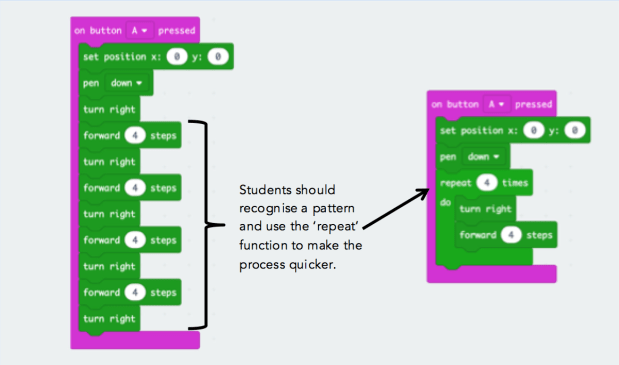
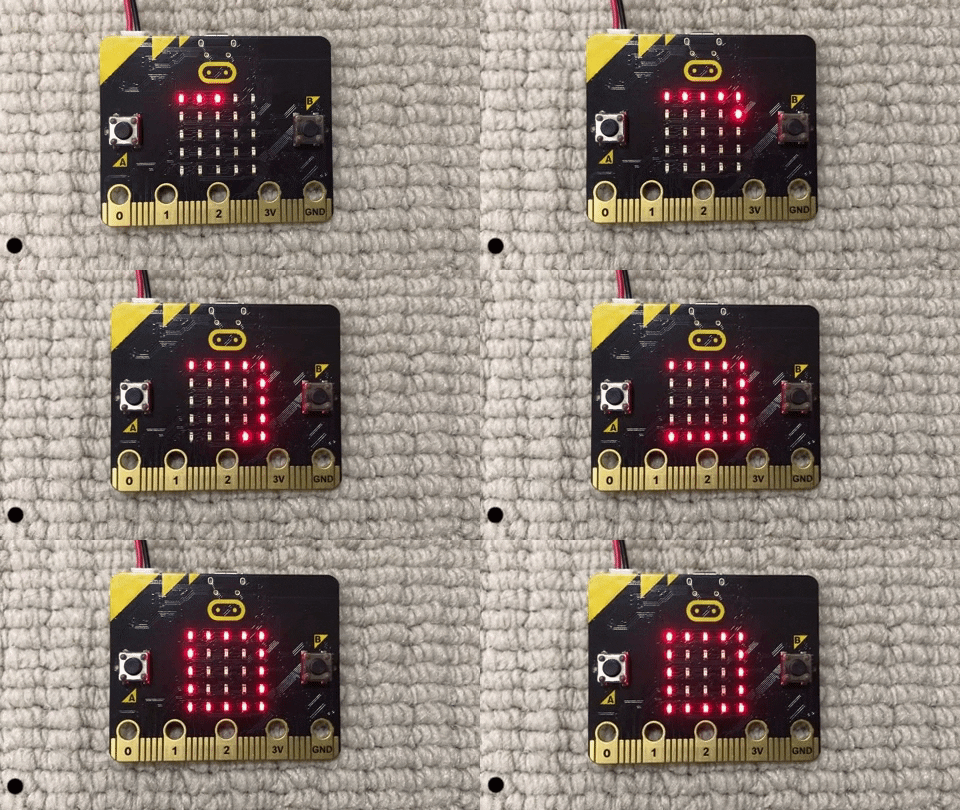
There are a few pedagogical considerations for educators in teaching computational thinking across all contexts, including the addressing of misconceptions, selection of resources and applying evidence-supported pedagogical frameworks. The most common misconceptions about CT are that it is simply integrating technologies into the classroom or that it is just teaching students how to code, and these may potentially limit students’ learning (Yadav, Stephenson & Hong, 2017). Because of the wide availability of resources, educators should take extra care in selecting appropriate tools that are accessible, have scope for student growth and support a relationship between CT, curriculum content and tool (Kale et al., 2018). Lee et al., (2011) propose the ‘Use-Modify-Create’ model in which students begin as users of technology, interacting with work created by someone else and iteratively modify that work until they feel comfortable to create their own work. The implementation of this model was linked to deeper engagement, reduced anxiety and an environment supportive of challenge and growth.
Reference List
ACARA. (2014). Australian Curriculum: Digital Technologies (F–10). Retrieved from: https://www.australiancurriculum.edu.au/f-10-curriculum/technologies/digital-technologies/structure/
CSTA., & ISTE. (2011). Computational thinking teacher resources (2nd ed.). Retrieved from: https://www.iste.org/explore/Solutions/Computational-thinking-for-all?articleid=152
Grover, S. (2018). The 5th ‘C’ of 21st century skills? Try computational thinking (not coding. Retrieved from EdSurge News: https://www.edsurge.com/news/2018-02-25-the-5th-c-of-21st-century-skills-try-computational-thinking-not-coding
Kale, U., Akcaoglu, M., Cullen, T., Goh, D., Devine, L., Calvert, N., & Grise, K. (2018). Computational What? Relating Computational Thinking to Teaching. Techtrends, 62(6), 574-584.
Lee, I., Martin, F., Denner, J., Coulter, B., Allan, W., & Erickson, J. et al. (2011). Computational thinking for youth in practice. ACM Inroads, 2(1), 32.
Yadav, A., Stephenson, C., & Hong, H. (2017). Computational thinking for teacher education. Communications Of The ACM, 60(4), 55-62.

