Virtual Reality (VR) is the experience of being immersed in a simulated, interactive environment; the perspective, level of immersion and realism changing depending on the tool (Hedberg & Alexander, 1994). In addition to filtering into the classroom context, this technology has also been used in gaming, social media and training in industries like aviation and medicine (Kavanagh, et al., 2017; Southgate, 2018).
There are two different types of VR technologies: desktop VR and wearable VR. Desktop VR technologies include games like The Sims and simulated worlds like Second Life, in which the sense of presence does not come from the proximity, but rather the level of interaction and the way that the world represents reality (Hedberg, Harper & Dalgarno, 2002). The main benefits to this type of technology is that it is a more financially viable option to wearable alternatives while still presenting students with educational benefits such as reducing cognitive load, increasing spatial visualisation and allowing interaction (Lee & Wong, 2014). Alternatively, wearable VR such as Google Cardboard, Oculus Rift and Samsung Gear are head-mounted devices that range in price, experiences available and capabilities (Southgate, 2018).
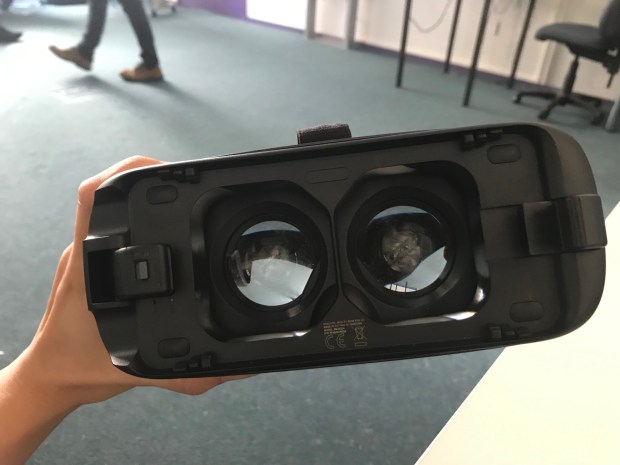
Allowing students to experience VR in any of these forms may have potential benefits. A study of students immersed in an interactive VR experience where they were able to manipulate scientific concepts such as gravity and friction, showed those students having better retention and understanding of those concepts than their peers who learned the same content via lecture (Allison & Hodges, 2000). Additionally, incorporating VR into the classroom context has many socio-emotional benefits such as potential in increasing self-efficacy and confidence, encouraging perspective-taking and empathy, as well as allowing children to improve their social cognition (Bailey & Bailenson, 2017). However, educators should take care to consider potential issues as well such as privacy concerns, students disengaging with reality and distraction (Southgate, 2018).
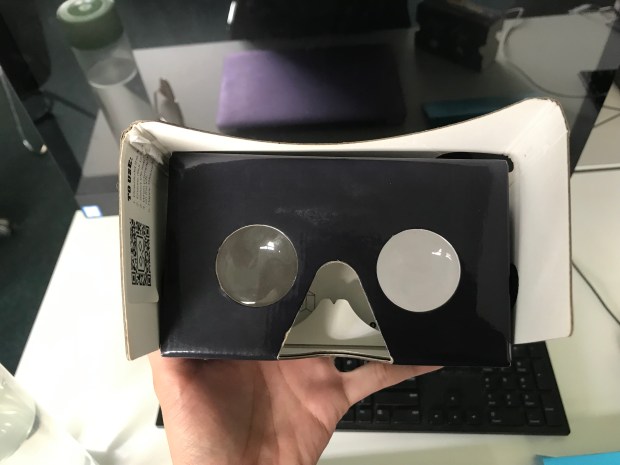
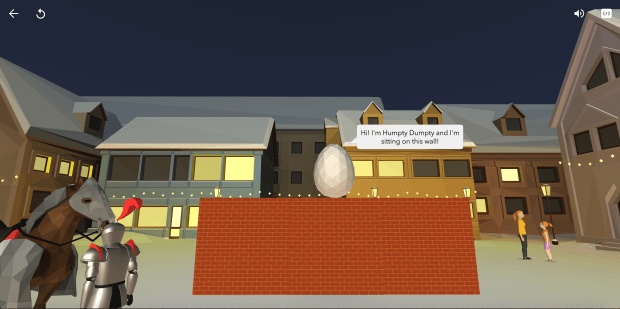
However, much like the discussion of AR in the previous post, students are engaged in more higher order thinking skills when they are designing their own experiences. A platform such as CoSpaces allows students to design their own AR world using the backdrops and characters provided, as well as program their characters to do certain actions (incorporating the skills of computational thinking) and then load these worlds onto a viewing device such as a mobile phone. This types of design activity not only has potential for incorporation in all learning areas, but is also strongly linked to the engaging, interactive nature of constructivism (Kavanagh et al., 2017).
Reference List
Allison, D., & Hodges, L. (2000). Virtual reality for education? Proceedings of the ACM Symposium on Virtual Reality Software and Technology, 129(135), 160-165.
Bailey, J., & Bailenson, J. (2017). Considering virtual reality in children’s lives. Journal Of Children And Media, 11(1), 107-113.
Hedberg, J., & Alexander, S. (1994). Virtual Reality in Education: Defining Researchable Issues. Educational Media International, 31(4), 214-220.
Hedberg, J., Harper, B. & Dalgarno, B. (2002). The contribution of 3D environments to conceptual understanding. In O. J. McKerrow (Eds.), Winds of Change in the Sea of Learning: Proceedings of the 19th Annual Conference of the Australasian Society forComputers in Learning in Tertiary Education Vol 1 (pp. 149-158). Auckland, New Zealand: UNITEC, Institute of Technology.
Kavanagh, S., Luxton-Reilly, A., Wuensche, B., & Plimmer, B. (2017). A systematic review of Virtual Reality in education. Themes in Science and Technology Education, 10(2), 85-119.
Lee, E., & Wong, K. (2014). Learning with desktop virtual reality: Low spatial ability learners are more positively affected. Computers & Education, 79, 49-58.
Southgate, E. (2018). Immersive virtual reality, children and school education: A literature review for teachers. DICE Report Series Number 6. Newcastle: DICE Research. Retrieved from http://dice.newcastle.edu.au/DRS_6_2018.pdf

